
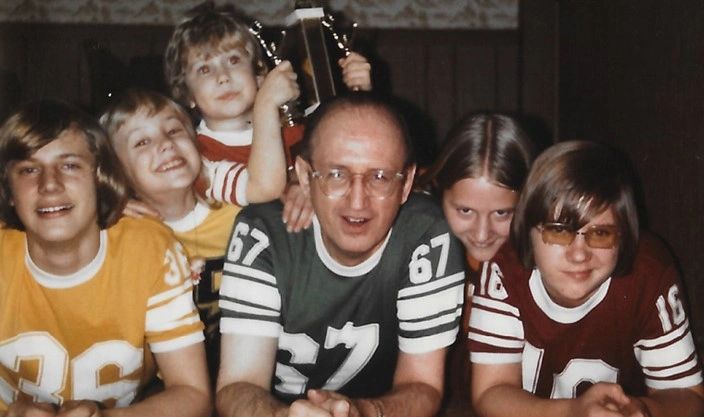
[From right to left: Mark S. Ditko, Helena Ditko, Uncle Steve, Patrick J. Ditko, Joanna Ditko, Stephen Ditko] © Ditko Estate 2018, All Rights Reserved
The Secret Life of Steve Ditko: Spider-Man Co-Creator’s Family Opens Up
He helped create the web-slinging hero — but who was the man behind the mask?
BY JAY DEITCHER (EDITED BY MARK S. DITKO WITHOUT ANYONE’S PERMISSION)
UNCLE STEVE went back home to Johnstown, Pennsylvania, from New York City, several times a year, usually in the Summer (for the family cookout) and then again at Christmas later in the year. Interestingly, early on in Steve Ditko’s career, his brother, Patrick, overheard his older brother, Steve, tell their mom, “I don’t want to talk about work, I’m here on vacation.” So, more or less, what happens in New York stays in New York. And so it was. And the other side of that, from what others have said, what happened in Johnstown PA, stayed in Johnstown, PA. So much so, that the New York friends and associates of Steve Ditko didn’t realize that he had another entire life and close family circle in his hometown. And these two worlds would rarely collide over the course of his lifetime.
As Mark, Steve Ditko’s nephew, divulged, it was true, no one really talked about his work while he was home throughout the early 60’s. And Mark never even found out what he did in comics until the early 70’s. Later in life, his dad, Patrick, passed on this conversation that he had overhead when his brother, Steve, told his mom about his wishes those many years ago.
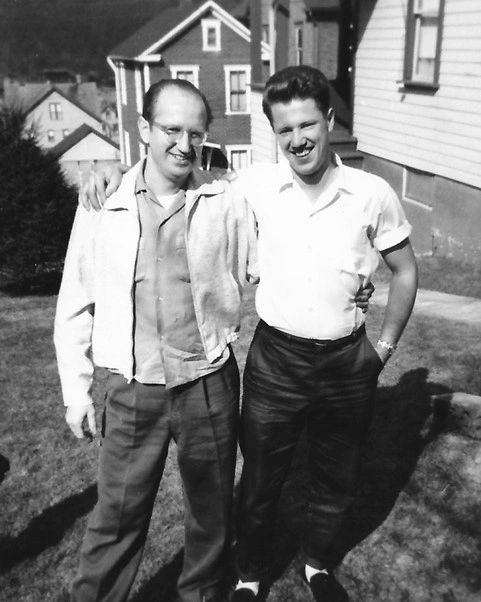
[Steve Ditko and brother Patrick S. Ditko at their home in Johnstown where they grew up] © Ditko Estate 2018, All Rights Reserved
“I specifically remember a couple times when I was either told not to discuss his activities in New York City with him, or that he didn’t personally want to discuss his industry work while he was home”, his niece, Joanna Opela, tells Rolling Stone in an exclusive interview. “And when I was in college, and my classmates found out that I was related to the legendary Steve Ditko, my dad told me to leave Uncle Steve alone.” Joanna went on to say that “being a little girl I was always hanging around my mom. Because of this I overheard more of the adult conversations about Uncle Steve that my older siblings didn’t hear. So, yes, I knew early on that they were shielding him from something”. Yes, Joanna inadvertently stumbled onto the fact that Uncle Steve had an alter ego that he didn’t want to discuss in Johnstown.
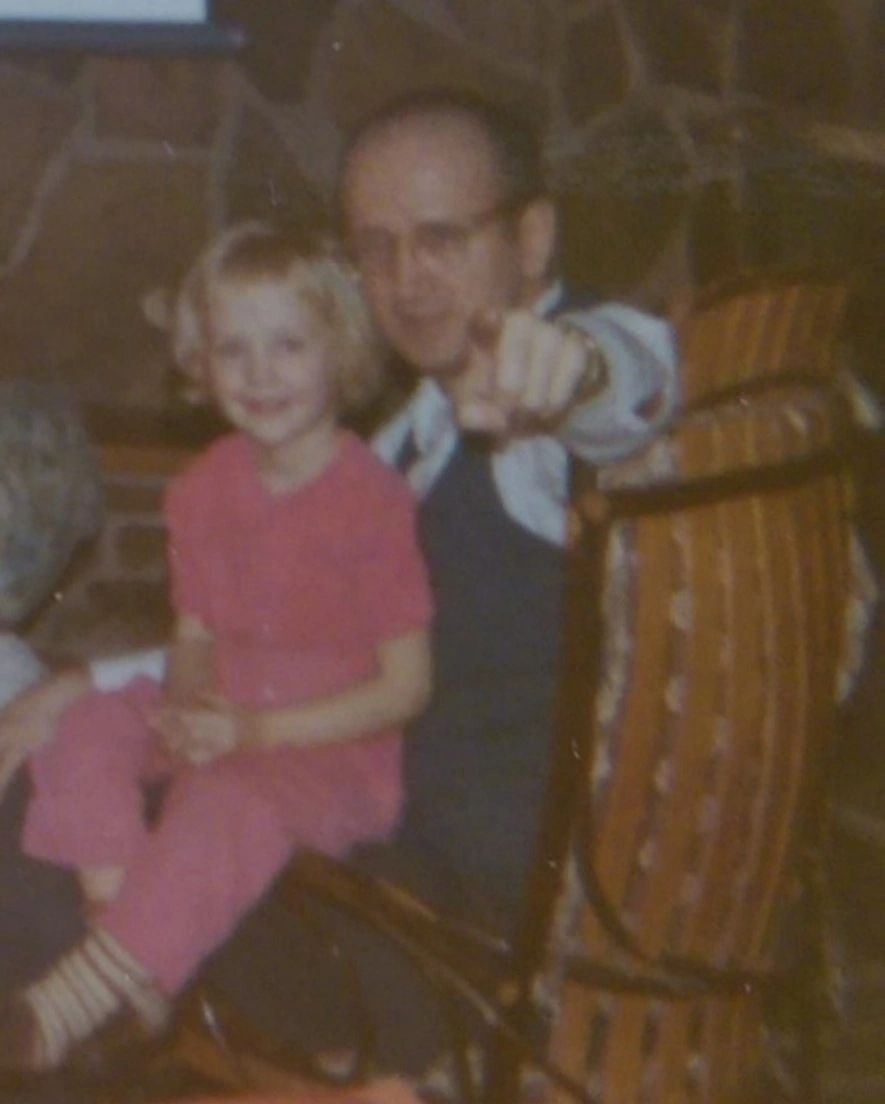
[Steve Ditko and his niece Joanna Ditko (Opela) in Johnstown] © Ditko Estate 2018, All Rights Reserved
Of course, the adults knew about his profession as a comic-book creator, but to his nieces and nephews throughout the 60’s, he was simply the funny, entertaining, and outgoing uncle who happily played games with them, wrestled, staged skits, sang songs, or who was either flipping burgers or scientifically manufacturing bobalki balls (a traditional Slovak Christmas dish).
Still, during the 60’s in every Ditko house there was a wealth of comics, likely shipped back into the Johnstown wilderness from Steve’s apartment or studio somewhere in the bowels of Hell Kitchen. The youngest of the nephews at that time, Mark, was especially fond of Konga, a nazi-battling pseudo-King Kong. He had no clue his uncle drew the character that he loved so much. In fact, this story, told by Mark, is one of his first impactful memories of seeing the artistic skill that his uncle had.
Per Mark: “As I remember, it was about 60 years ago, Christmas Eve in the early 1960’s. I was probably around 4 or 5 years old, and the house was buzzing with family. Everyone was there as usual. Bubba and Poppy (my dad’s parents), aunts, uncles, my parents, with kids scattered about in various activities. The smells of the traditional holiday food filled the air, and the sounds of laughter and conversations filled the home. Like every kid during that time of the year, I was the proverbial “kid in a candy store”, surrounded by loving family and visions of future Christmas surprises. It was a classic holiday scene from an ‘old timey’ movie or TV show. At some point I saw my brother Stephen, just 2 years older than me, with Uncle Steve. I ran over to see what they were doing. My brother had drawn something, and my uncle with a pencil in hand, was going over his linework and showing him areas to improve, or things to think about regarding his drawing. At that time in my life, I was enjoying comics that were somehow magically appearing at our house. I vividly recall falling in love with a child-like gorilla in the pages of the Charlton comic series, Konga. That was the start of my attraction to gorillas. So, when I saw my uncle with a pencil in his hand, and clearly skilled at using it, I had to ask, “Uncle Steve, can you draw a gorilla?” The thought of asking him that still makes me smile inside to this day. Little did I know that he was drawing the very gorillas that I was admiring on those Konga pages. (Something that I wouldn’t learn until almost a decade later.) And to my delight, before my disbelieving yet eager eyes, he sketched out the most wonderful gorilla that I could have ever imagined.
“Uncle Steve,” Mark said “You are really good.” Mark was immediately and forever hooked on his uncle’s artistic skills. And the rest, as they say, is history.
Steve Ditko lived in a true multiverse, with worlds that only he could journey between. In the city, he rarely spoke about home, and at home, he rarely talked about life in the city. But at this exact instant, he momentarily revealed his secret identity. This was when Mark realized his uncle was magical.
And after telling his Uncle Steve that story in the early 90’s, Mark received this as part of his reply.
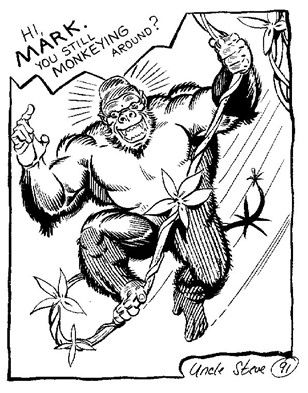
[Steve Ditko sketch] © DitkoVerse 1991, All Rights Reserved
Within literal moments from Mark’s realization, Steve Ditko would forever change the cultural landscape by co-creating a superhero unlike any before him. One with uncertainties, whose life mission was sparked by a massive mistake. He lacked refined social skills. His head buzzed with concern. Many issues ending with him steeped in doubt. Contrasting other heroes who only covered half their faces with a cowl, Spider-Man hid everything.
Fast forward to the present and you can’t walk into a preschool without seeing rows of cubbies lined with red and blue webbed backpacks. There have been cartoons. Video games. A ride at Universal Studios. Movies. Relaunches of movies. Relaunches of relaunches of movies. A multiverse with a spider-therapist, spider-baby, and spider-pig. Everything teeming with the themes set by Ditko and his co-creator, Stan Lee, in the first 38 issues and two annuals of The Amazing Spider-Man.
Digging for click-bait, some people seem compelled to compare Steve Ditko with Peter Parker, incorrectly emphasizing that he, too, hid his entire life; over-emphasizing a narrative that he did not give interviews, and was therefore a recluse.
Did he model Peter Parker after himself? He’s not here to answer that, so let’s just let that one go. Everything about this ‘similarity’ is mere speculation. But others have said, “His high school picture of himself looks just like Peter Parker!” Well, here are a number of his classmates from high school. Personally, they ALL look like a model for Peter Parker. Peter Parker was the image of ‘every high schooler’ at that time. Is there a better way to engage the reader? Steve Ditko was a master of character creation.
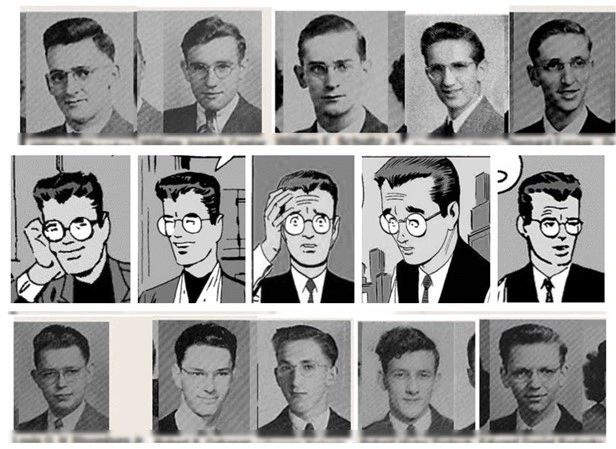
[Johnstown Hight School Senator Yearbook]
Steve Ditko speaks: “I don’t keep records of inspirations, etc. I’ve read some science fiction, astronomy, geology, history, psychology, philosophy, novels, etc… You have to learn to be the judge of what you’re doing, why, and not to copy or imitate others.”
It’s said he didn’t give interviews. However, early in his career, he gave plenty of interviews, especially to the growing fanzine publications. This is well-documented. But as time went on, and compare it to today’s press, his interview and words became more and more distorted and only meant to service the author’s own preconceived or stereotypical narrative. Little by little, it was less and less about the truth, and more and more about sensationalism and ‘the story’.
Steve Ditko speaks: “The interviewers were too incompetent, too unwilling, to know or to care, to properly deal with the creator issue, with any valid issue objectively, with facts and not claims, opinions, or the self-serving.”
Yes. He refused photos and commissions. He was a man born in 1927, living his early childhood during the depression years.
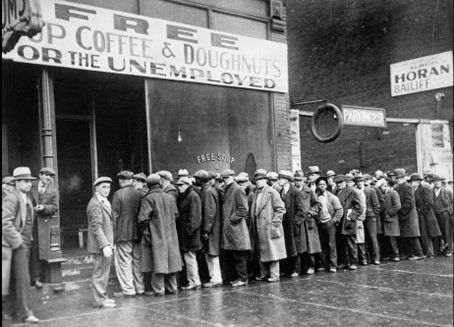
[Unknown author - U.S. National Archives and Records Administration]
He grew up and was raised by proud parents with strong Slovak roots whose path through life was one of putting your head down and working for what you need. He wasn’t a celebrity, and he wasn’t after part-time, infrequent commission work. He wanted steady work, that he could count on, doing what he loved most – putting his head down at his drawing board and creating stories, and then paying the bills. Not doing snapshots of images for fans, to later sell to the highest bidder.
Steve Ditko speaks: “My generation had a saying “I pay my own way”. People were ashamed to need, take charity. Yet, in emergencies, fires, etc., people were generous. Today, affairs are more international, global, so there is far less chance of ‘peace’ or sanity ‘in our time’. More and more the individual needs to positively fuel one’s spirit. Fables, poems etc. are good sources. Even today, too many now don’t care about the difficult lessons learned in the past or the truths right today. A big problem is that too much is done by too many to protect, excuse the wrong, bad, even the evil. ‘To get along’, ‘don’t make trouble’ etc. Veterans of war are often silent about their honourable experience, others don’t really want to hear about such tense, frightening, horrible conditions, hourly, daily faced by the military men. With most individuals it’s ‘I don’t really want to know, don’t want to face it, it’s too upsetting’ as seen today with communities, society’s problems, troubles, until it escalates to dangerous situations like national debt etc.
The comic books that saw the birth of the superhero were spawned during this era of global conflict, offering inexpensive escapism to millions of readers.”
And the stories go on. It’s a sad state of affairs when an article about a true comic industry legend such as Steve Ditko has to spend so much of its space debunking all the diatribes, myths and speculative antidotes that have been repeated over and over and over again.
And no, Steve Ditko didn’t leave Marvel because of a disagreement with Stan Lee regarding the identity of the Green Goblin. Does this have to be printed 1000 times before it ceases to be stated again by some future “comic historian” or “journalist”? Please, let’s make it stop!
“I never talk about myself,” he famously said in publicity for his 1968 DC co-creation The Creeper. “My work is me.” Again, he never saw himself as a celebrity. He was an artist, an illustrator, a character creator, and a storyteller. Not a public figure. And it’s only in recent years that the Ditko family has been making his hidden life accessible to others who deeply admired his legacy and personal impact on the modern-day entertainment landscape. They loved him his entire life as a family member, and truly want others to see what they saw in him, and additionally to dispel the rumors and innuendos that have accumulated over the past 60 years.
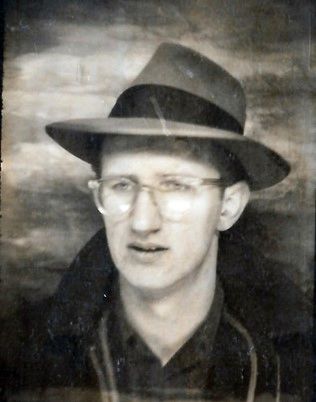
[Steve Ditko, circa 1950s, © 2018 Ditko Estate, All Rights Reserved
Journalists called him the J.D. Salinger of comics and portrayed him as an Ayn Rand-obsessed recluse. Neil Gaiman referred to him as “impossibly uptight.” It’s said that some of his peers refused to work with him. Fans harassed him, slamming their fists on his office door, trying to catch a glimpse. Attempting to extract from him the things that ‘they’ wanted. And at the same time, people dehumanized him to the point it seemed unfathomable to think he had a life with friends and family. Critics jeered at his moral absolutism. Lee talked about him as if he were a stubborn quack who sabotaged his own career, and fans acted as if he were a traitor for leaving Spider-Man.
Steve Ditko speaks: “A mind that refuses to accept or defend the truth, by that act, permits lies to exist, to give them respectability and influence, thereby undercutting and eventually destroying everything of real value. Destroyed, not by the power of evil, but by the good’s refusal to protect itself against an enemy that could exist only with good’s permission. A truth is not made up or created. It is discovered.”
Look, it’s uncertain how much of this is supported by actual facts or is merely a result of an isolated encounter. But he who is without flaws cast the first stone, as it’s said. This article doesn’t have the space to address each of these points but is it even necessary when you consider the overwhelming illustration of who Steve Ditko really was.
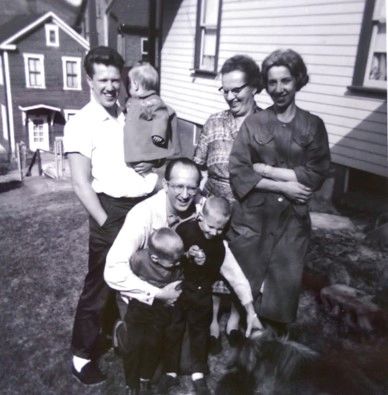
[Steve Ditko and family, circa 1964] © 2018 Ditko Estate, All Rights Reserved
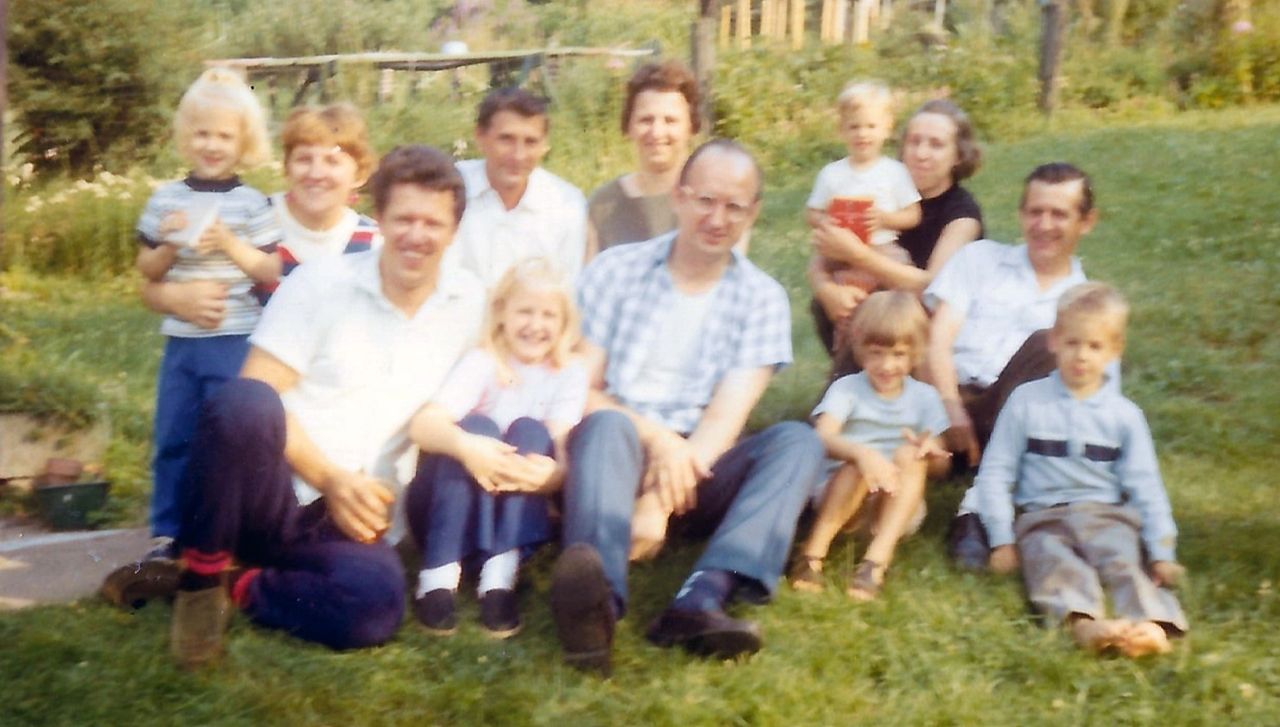
[Steve Ditko and family, circa 1964] © 2018 Ditko Estate, All Rights Reserved
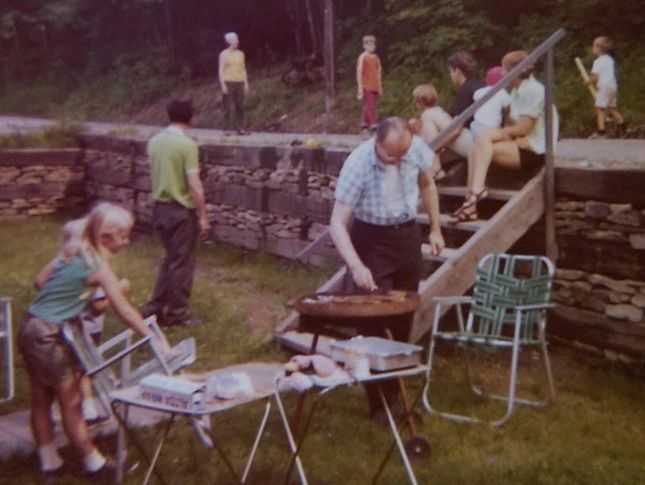
[Steve Ditko and family, circa 1970] © 2018 Ditko Estate, All Rights Reserved
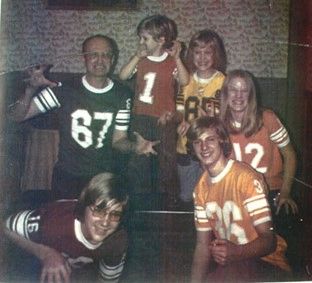
[Steve Ditko and family, circa 1975] © 2018 Ditko Estate, All Rights Reserved
With a recent settlement over the rights of Ditko’s Marvel characters behind them, the extended Ditko family wants people to recognize that their uncle was a normal guy. Well, maybe more of an exceptional guy in some respects. But that he had a strong family connection that ran parallel to his industry career and spanned his entire life.
Today, as a result of a heightened interest in the real history of the comic industry, it’s more likely that Steve Ditko would be looked at with more empathy after what he has been exposed to by past poor journalism or the minimalizing of what he contributed through his work. The tide is turning due to people like Alex Grand (of Comic Book Historians), Zack Kruse (author of Mysterious Travelers: Steve Ditko…), Jack C. Harris (author of Working with Ditko), Lenny Schwartz (producer of the Ditko Play), Matt Lamb (Bottle Works in Johnstown, PA) and the efforts and voices of Mort Todd, Craig Yoe, Jim Shooter, and many others who set the record straight, as well as the Ditko family themselves.
It can be conceded that in reality, Steve Ditko was a vulnerable character similar to Spider-Man, in that his life was somewhat misunderstood. But make no mistake, much of that was due to the voices of others, not his.
Steve Ditko speaks: “Claims about, most things regarding me have come not from me but from other [sic] who believe they are qualified to speak for me or about me. Their speaking about me is supposed to prove that they know what they are talking about.”
So, even this article is on a slippery slope. However, in exclusive interviews with Rolling Stone, family members, friends and industry experts describe a driven artist who was characterized by others as being unable to fit into social norms, when in reality he cultivated thriving relationships, in person and through extensive written correspondence.
Now, as it was mentioned earlier, it is true that similar to how Peter Parker never lets loved ones get too close for fear it would put them in danger, it appears that Steve Ditko did compartmentalize his life, keeping work and family separated. Mark, his nephew, believes that this was amplified by a period when others, interested in the life of Steve Ditko, started contacting family members for more information. That was unacceptable in the eyes of Steve Ditko, and he wrote an essay on the subject of privacy. At that point, Mark believes that in order to protect his family, he became more cautious about what he said to whom about his Johnstown life.
Steve Ditko speaks: “Every person should value his privacy and it is important to know, understand what is meant by privacy.”
Born in Johnstown on Nov. 2, 1927, Ditko came from a hardworking family of Slovakian and Ukrainian immigrants who helped build the mill town back up after an 1889 flood rushed through the city, decimating 1,600 homes and killing 2,209 people.
They were a family of Steves, his brother, Patrick, says. “It went down a line.” Ditko’s grandfather and dad were Steves. Patrick’s middle name is Steve, and Patrick named his son Stephen.
“I got calls from all around the world. People thinking I was my uncle,” his nephew says, explaining what prompted the change of being referred to as Steve, to his birth name, Stephen, instead.
Steve Ditko was the oldest of four — two boys and two girls — in what his niece, Joanna, calls “a big old Catholic family,” led by his carpenter dad and seamstress-homemaker mom. “When your dad tells you go do something, you go and do something,” Joanna says. They had a barn and garden, and there were chickens to feed. Steve chopped wood for the stove and shoveled coal for the furnace. In the Ditko household, everyone worked.
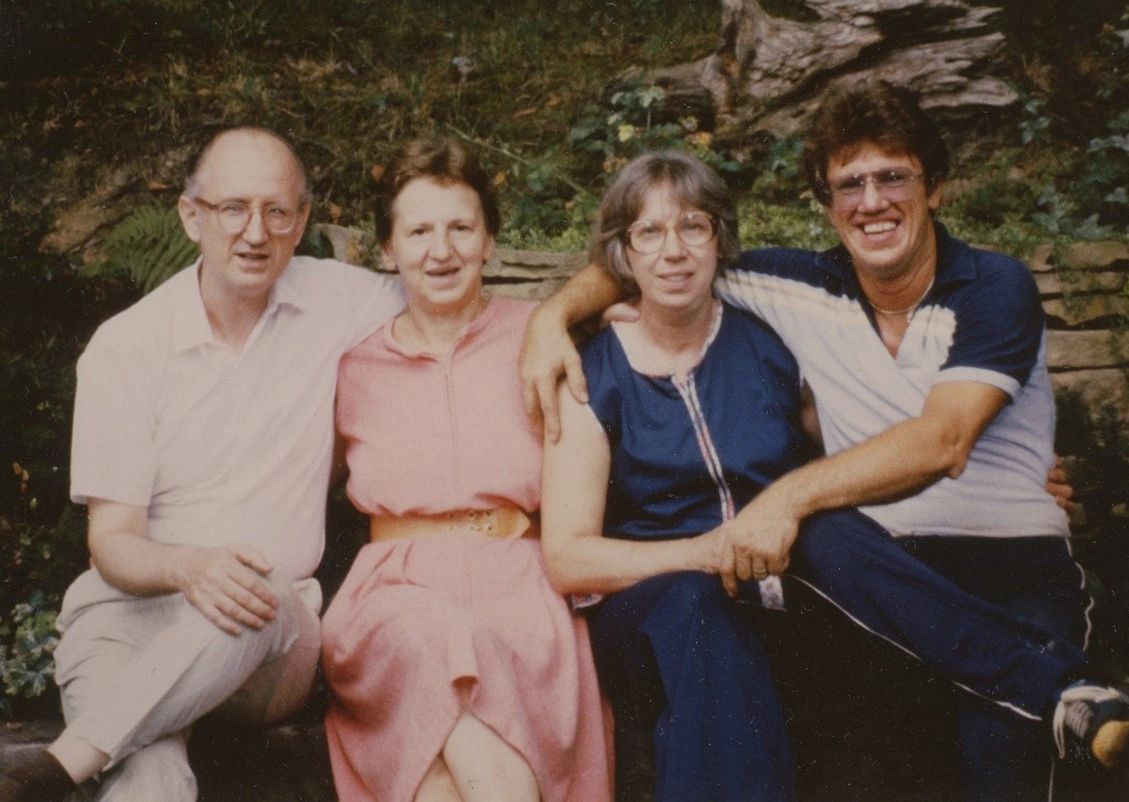
[Right to left: Brother Patrick S. Ditko, sister Betty, sister Anna, Steve Ditko] © Ditko Estate 2018, All Rights Reserved
“They were very Old World,” Mark says. “It was nose to the grindstone. Work hard, enjoy what you do, be the best you can be, and earn your keep by helping where you can, when you can.”
In the house where Steve Ditko grew up, comics were everything and everywhere in the house, and Ditko’s dad spent vacations posted next to the fireplace reading Prince Valiant strips and other comics while sitting in his favorite chair. He loved comics.
Detective Comics #27 hit stands when Ditko was 12, introducing the world to Batman, a hero more terrifying than the criminals he faced. In his first appearance, he knocked a criminal into a vat of acid. “A fitting ending for his crime,” Batman says before swooping into the darkness.
As an illustration of his attraction to Batman, these comic fragments were found in a box of things that he had given to his nephew, Mark.
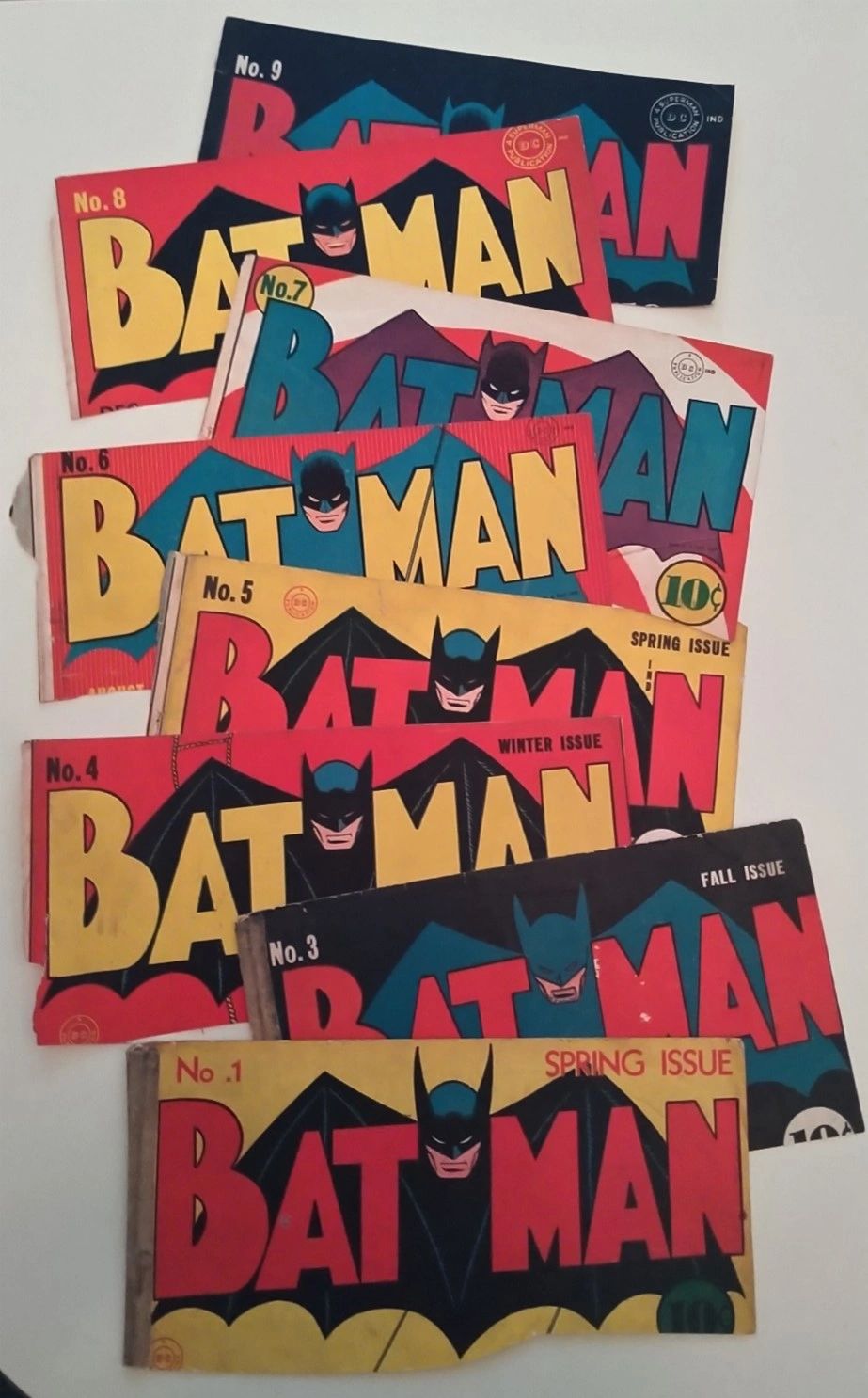
[From the collection of Mark S. Ditko]
And yes, he did eventually draw Batman the way that he saw him.
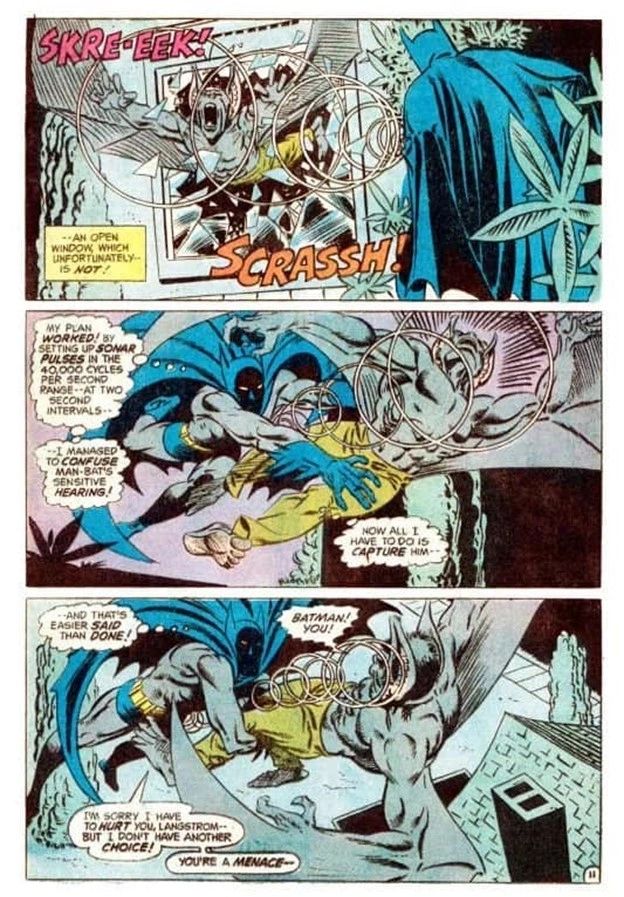
[Manbat #1] © DC Comics, 1975
So, the foundations of who he would become were possibly laid during his upbringing and constant exposure to the comics of the day. Regardless of where it came from, to Steve Ditko, creating comics was a dream come true.
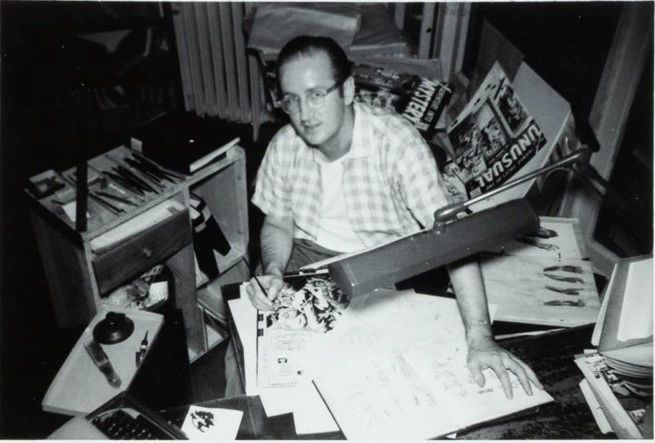
[Steve Ditko in his New York studio, Nov 1959] © Ditko / Stanton, All Rights Reserved
Like Peter Parker, Steve Ditko was “mild mannered,” says his brother, Patrick, seven years his junior. “Quiet and to himself” — the type to choose science experiments and books over hanging out with buds. Steve Ditko built himself a locked hideout in the upper decks of the family barn, resembling the lab in which Parker created his webs, where he spent his free time tinkering with flasks, a Bunsen burner, and microscopes.
After high school, in 1945, Ditko enlisted in the Army, traveling to Germany via boat, publishing his first comics — single-panel gag cartoons — in the base newspaper. He sent letters home, doodling across the envelopes, asking how the family was. While there, he took extensive photo documentation and notes of his traveling, all organized into large binders, one of which was shown at the Ditko Bottle Works exhibit in 2021.
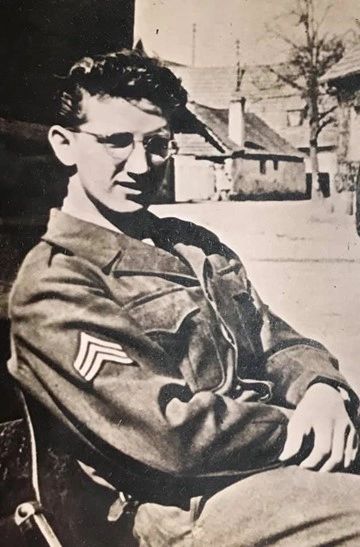
[Steve Ditko in Germany] © Ditko Estate, 2018, All Rights Reserved
After being honorably discharged in 1948, Ditko spent a brief period living at home in Johnstown, then made his way to Manhattan. His family knows little about his time studying at the Cartoonists and Illustrators School, which he attended from 1951 to 1953 under the tutelage of Batman artist Jerry Robinson, or the years he spent breaking into the industry, working for comic companies that paid little but offered creative freedom.
By the time he returned home in the mid-1950s to recover from a bout with tuberculosis, he had a fully formed secret identity.
“When he came home from New York and stayed with us while he was recuperating, I never knew that he had anything,” his brother says. “We slept in the same bedroom, and I never, never, never knew that he had tuberculosis until years after that.”
After a full recovery, Ditko returned to the city in late 1955, where he found his first work at Marvel Comics, then called Atlas, working under editor-in-chief, Stan Lee, for a four-pager in the horror-fantasy anthology series Journey into Mystery. By 1958, Ditko was one of Lee’s go-to artists, and soon, the guy he’d turn to when Jack Kirby, the gold standard in Lee’s eyes, fell through.
Regarding how and when Spider-Man came into existence? There are several theories that will not be covered here since they have been written about over and over and over and disputed over and over and over. They are not worth being rehashed here, regardless of whether you are on the side of Jack Kirby bringing this idea to Stan Lee, or the side of Stan Lee dreaming up the idea out of boredom while watching a gnat crawl around the wall of his office.
Putting the uncertainty of ‘who’ originally said the word ‘Spiderman” first, one thing is clear: Steve Ditko was the primary artist, character creator and detailed plot master for the first 38 issues and 2 Annuals that saw print.
Steve Ditko speaks: “Stan never told me who came up with the idea for SM or for the SM story Kirby was penciling. Stan did tell me SM was a teenager who had a magic ring that transformed him into an adult hero: SM. I told Stan it sounded like Joe Simon's character, The Fly (1959), that Kirby had some hand in, for Archie Comics. Now here is a Fly/Spider connection. Not in any seeing a fly on a wall but in being told, in hearing, of the connection. And to paraphrase Stan, this connection "may even be the true one" and the other, of seeing a fly on a wall, a falsehood. Stan called Jack about The Fly. I don't know what was said in that call. Day(s) later, Stan told me we would be doing SM.”
Beyond these facts, there are 16 essays (approximately 40 -50 pages) that Steve Ditko wrote on the subject of Spider-Man from his ‘rough record’ made when he left Marvel. These will eventually be republished in their entirety.
Steve Ditko speaks: “After I left Marvel (1966), I wrote a rough record of my early involvement with Spider-Man (S-M), Dr. Strange and The Hulk. One reason was because Stan Lee and Jack Kirby were each claiming sole credit as "creator'' of Spider-Man (and other Marvel characters). There was no real interest by them (and others) in whether the concept and claim of "creator'' was a self-imposed label, credit, or a claim that could and should be validated.”
So, no matter what happened, Ditko took the reins, making Spider-Man the awkward nebbish he is today. Unlike Kirby, and the many artists parroting Kirby at the time, Ditko’s art was unique. He had the ability to create imagery that could be seen as outside the norm, even weird characters that are gangly and strange.
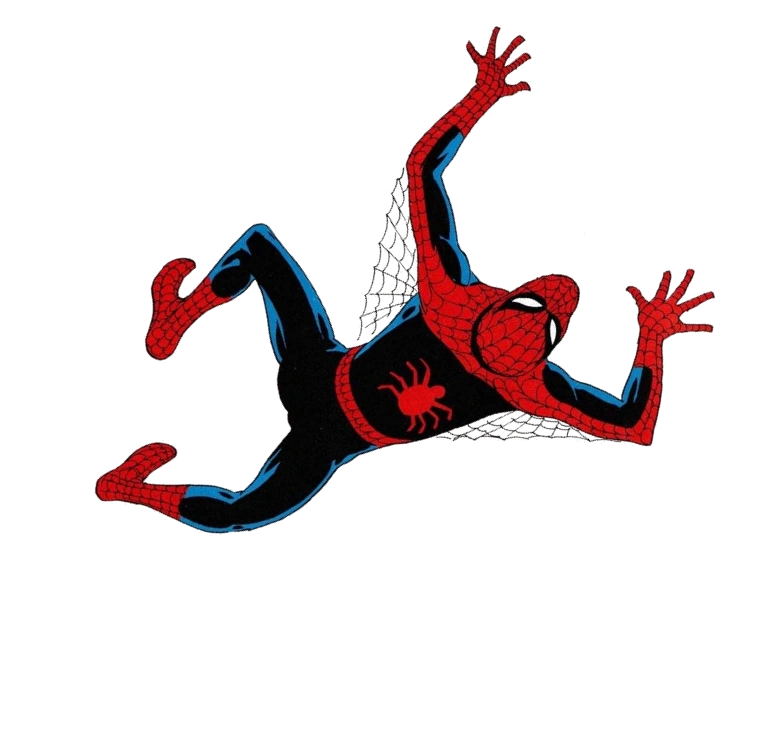
Ditko perfectly tapped into teenage awkwardness, and his art read like a silent movie, zeroing in on small emotional beats in a style that would later be deemed ‘Decompression’. His characters were sometimes trapped in a nine-panel grid making any divergence of structure that much more impactful. Everything was thought out: from his thin soles (so the stickiness seeps through) to his full mask (to hide his age).
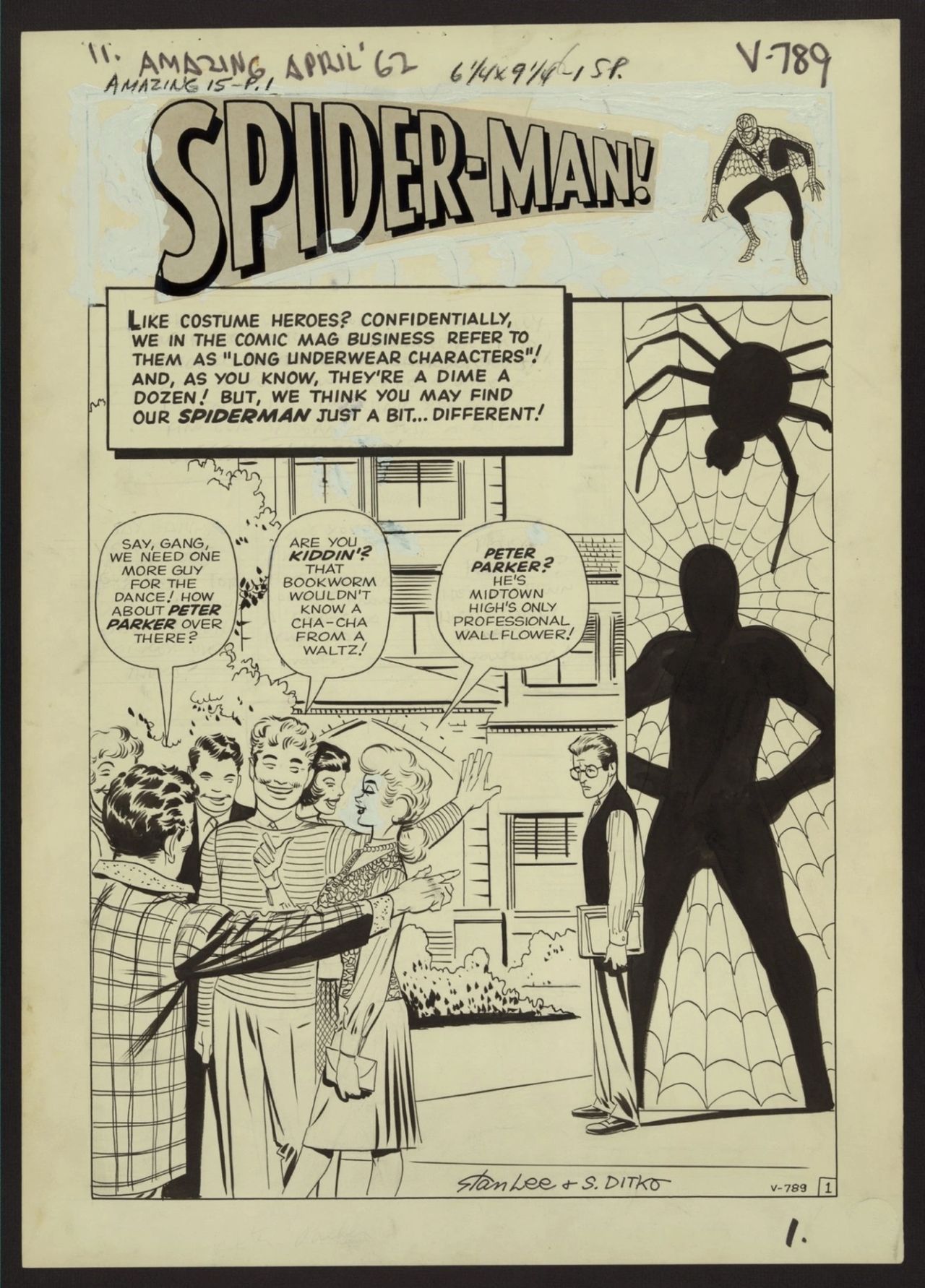
Loneliness is laced throughout Spider-Man’s first appearance. On the opening page, a gang of giddy, Happy Days-looking teens point and cackle at a distraught Parker in the distance, who casts a Spider-Man-shaped shadow on the wall behind him.
“While it’s trying to convey a sense of strength, [the shadow] is blending into the wall,” explains Dave Gussak, a professor in the graduate art-therapy program at Florida State University and the author of The Frenzied Dance of Art and Violence.
Spider-Man comics flooded newsstands. The comic industry that Ditko had entered into in the Fifties was changing. Marvel’s surge in popularity was covered by The Wall Street Journal and The Village Voice. Pop artists appropriated comic iconography. Marvel launched a fan club, the Merry Marvel Marching Society, and Lee spoke at colleges as the face of the company. No longer were artists required to simply create great work, they were expected to connect with fans.
Ditko’s second major Marvel creation, Dr. Strange, helped comics gain traction on campuses.
Steve Ditko speaks: “On my own, I brought in to Lee a five-page, penciled story with a page/panel script of my idea of a new, different kind of character for variety in Marvel Comics.”
And per a Stan Lee letter in The Comic Reader (#6, February 1963): "We have a new character... named Dr. Strange...Twas Steve's idea."
And again, from Stan: “Well, we have a new character in the works for Strange Tales (just a 5-page filler named Dr. Strange) Steve Ditko is gonna draw him. It has sort of a black magic theme. The first story is nothing great, but perhaps we can make something of him-- 'twas Steve's idea and I figured we'd give it a chance, although again, we had to rush the first one too much.”
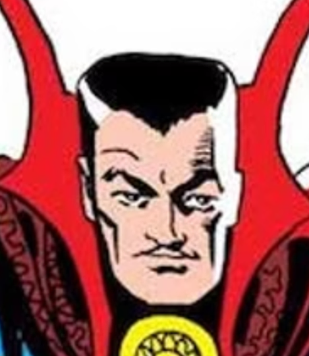
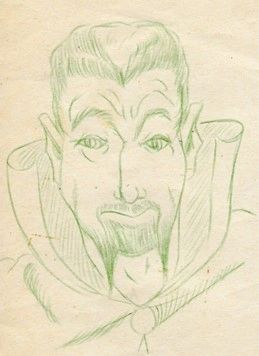
Who knows how long Steve Ditko had this idea, but what’s true, is that he created Dr. Strange and offered it to Marvel for publication. Below is a sketch that was uncovered by Patrick S. Ditko, Steve’s brother, of a likely Dr. Strange prototype that he drew while overseas in the army.
[Very early, pre-Marvel Steve Ditko sketch] © Ditko Estate, 2018, All Rights Reserved
Strange is a sorcerer who can project his spirit across dimensions and into dreams. Strange’s art is cluttered with claustrophobic shapes and swirls, pulsing with the same anxiety as Spider-Man, but reflected with expressionistic flair.
“A lot of the hippies in college were like, ‘Man, he must be doing a lot of acid,’” says Mort Todd, a former Marvel and Cracked editor who was friends with Ditko for more than three decades. “Couldn’t be farther from the truth.”
Even alcohol was off limits. “He never touched it,” his nephew Patrick says, although Steve Ditko’s brother, Patrick, remembers him breaking this rule once, to cheers at the elder Patrick’s wedding.
As an illustration of Steve Ditko’s early commitment to the comic industry, he appeared at the first New York Comic Con, held in 1964 with around 100 attendees. Comic conventions offered creators a way to promote their comics, network, and supplement their income. “You talk to any creator that’s burst onto the scene in the last decade, chances are their work was discovered by an editor at a convention,” says Chris D’Lando, New York Comic Con’s event manager.
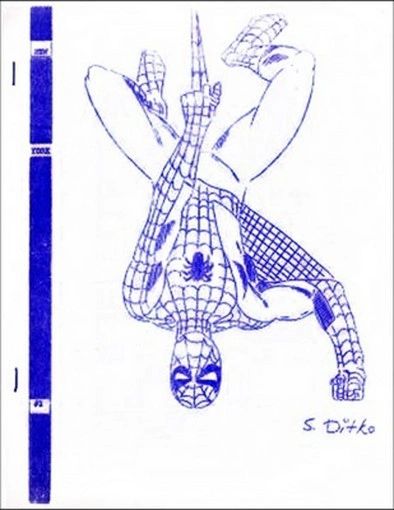
[Steve Ditko sketch for the 1964 New York Comic Con]
But for Ditko, who generally avoided large crowds, conventions added pressure that he never signed up for. “[Creators] like to stay home with our thoughts,” says Brian Michael Bendis, the co-creator of Miles Morales and decade-plus writer of Ultimate Spider-Man who popularized the Decompression movement in comics. But “the reward [for success in comics] is that you don’t get to sit in your basement alone, you have to sit on a stage and stare at people, which is absolutely what most of us are not wired for.”
At the convention, according to Marvel Comics: The Untold Story, Ditko participated in what one fan said was “the most depressing exchange I ever had with a comics pro.” The fan asked Ditko how to break into comics, and Ditko told him the job “paid too little and had few lasting rewards.” Sometimes the truth hurts. But, beyond this encounter, there are too many examples to print where Steve Ditko was very supportive of those interested in the comic industry, often giving valuable artistic advice.
However, Steve Ditko did not enjoy his con experience, as he explained in a 2015 essay: “I was continually asked questions about things of which I could never have any kind of knowledge, information: policies of comic companies, people I never met.”
He never made an official, confirmed convention appearance again.
During Ditko’s time with Marvel, he worked as a ‘contractor’, meaning his work was only month to month. No guaranteed contracts. No health insurance. No commitment for work.
Unlike some other comic companies, where pencilers received full scripts to draw from, Lee used what is called the Marvel Method: Lee came up with a germ of an idea for an issue, maybe a paragraph, maybe only a sentence, and potentially only a short statement, and then it was handed it off to the penciller, who drew the issue, created the visuals, developed the villains, pacing the story, filling in all of the details and large and small plot points. Then Lee added dialogue and narration.
“Comic books never had a strict division of labor,” Ditko wrote in a 2015 letter to David Currie, the author of Ditko Shrugged: The Uncompromising Life of the Artist Behind Spider-Man: “At the time, who created what was of no importance.”
This method only became an issue after Steve Ditko asked that he be recognized for his creative contributions. And Ditko pushed to be credited appropriately.
Lee replied to Ditko’s request by mocking him publicly. After Ditko took on complete full control of plotting with issue #18 of The Amazing Spider-Man Lee promoted the issue in other titles’ letter pages by writing, “A lot of readers are sure to hate it, so if you want to know what all the criticism is about, be sure to buy a copy!” Two issues later, on the first page of The Amazing Spider-Man, Lee derided Ditko, writing, “Many readers have asked why Stan’s name is always first on the credits! And so, big-hearted Lee agreed to put Stevey’s name first this time! How about that?!!” As promised, in the credits, Ditko’s name is listed first, but Lee’s is twice as big.
In issue 25, when Lee acquiesced to list Ditko as plotter, Lee credited him as “Scowling Steve.”
Their relationship had been fraught since Spider-Man’s first appearance. Lee’s scripts clashed with Ditko’s art, most evident in Spidey’s comedy routines while battling villains. Lee wanted a hero or villain on every page, and Ditko, following his own creative instincts, leaned more into Parker’s personal life.
Lee, one of his generation’s greatest self-promoters, easily fell into the Randian “looter” and “moocher” tropes. “Stan had a tendency to believe complainers, OOs [Ditko’s term for Other’s / Outsiders], know best,” Ditko wrote in a 2003 essay. “He granted them some kind of superior insights, knowledge. So they should be given arbitrary authority over the ideas of the editor, writer and artist.”
While Lee portrayed himself as the reader’s hip, liberal uncle, Ditko’s 60’s conservative character development played out on the page. Police were depicted exceedingly positively. In The Amazing Spider-Man #36, Ditko introduced a villain named “the Looter.” Two issues later, Parker walked past a group of campus protesters and scoffed, “Another student protest? What are they after this time?”
With journalists happy to give Lee credit for the entire Marvel universe, Lee wouldn’t speak up about Ditko’s contributions, and as told by nephew, Stephen, even family couldn’t avoid reading the press.
“They were outraged,” Stephen Ditko remembers. It reached the point where during one of Ditko’s Johnstown visits, his siblings met with him. His nieces and nephews, playing in a room nearby. As Stephen tells it, his brother, sisters, and other adult family members were telling him he needed to stand up for himself, giving him their advice. Ditko sat there silently. “Visibly upset, and very out of character for him,” Stephen recalls. The men apparently huddled around him, speaking in low tones, asking him what he planned to do. Ditko finally spoke up, and though Stephen couldn’t hear it, believes that he came up with a plan.
As a side note from Mark, he has no recall of this conversation, nor do other family members, but that’s not to say it didn’t happen the way Stephen remembers it.
Regardless, around the time issue 25 dropped, Lee stopped communicating with Ditko completely, according to a 2001 Ditko essay. Ditko would drop off pages to production manager Sol Brodsky, “while Stan, utilizing some kind of radar sense that would’ve made Daredevil envious, as usual managed to remain in his office until the artist had left, so that in all my life I never saw the two of them together,” Roy Thomas, Lee’s successor as editor-in-chief of Marvel Comics, recalled in Alter Ego #160.
In November 1965, Ditko handed in his final pages, not returning to Marvel until 1979.
In his autobiography, Excelsior, Lee claimed to not understand why: “Little by little I noticed that Steve was beginning to give off hostile vibes. Steve wasn’t the most communicative guy in the world, and to this day I’m not quite sure what the problem was.”
Tired of fans asking why he quit, Ditko wrote a 2015 essay, saying, “Why should I continue to do all these monthly issues, original story ideas, material, for a man who is too scared, too angry over something, to even see, talk to me?”
The years following his Marvel exit saw Ditko working across the comic landscape, co-creating Hawk & Dove, The Creeper, The Question and more for DC, and reimagining the character Blue Beetle for Charlton comics, while working on other characters and projects as well.
After Spider-Man, and the fallout with Marvel, it’s likely that he had learned a hard lesson, so he was more selective of the projects that he would work on, and people he would work with.
Steve Ditko speaks: “Once I left Marvel, I had no interest in the company, its comics, or games by insiders and outsiders, by others. I had many new interests: Wally Wood, Tower Comics, Witzend; Archie Goodwin, Warren, wash jobs; Joe Gill, Charlton, Blue Beetle, "Question"; my own creations, "Mr. A", etc..”
“Steve is the kind who would starve rather than violate his principles,” the former Marvel editor-in-chief Jim Shooter said in a 2011 blog. During a stint on Iron Man, Ditko refused to draw a picture of the hero drunk. He turned down a Batman script because it was supernatural. He rejected high-paying assignments because something went against his values.
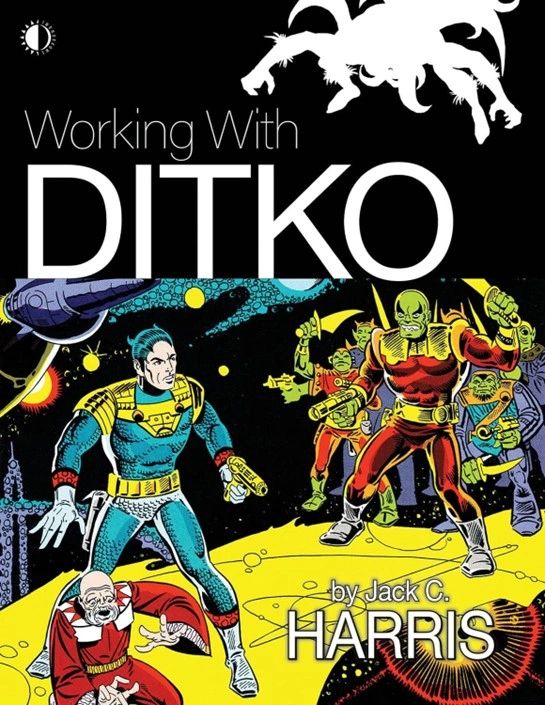
“He would never argue with anybody,” says Jack C. Harris, a former comic editor, author of Working with Ditko, and friend for 40-plus years, whose office at DC was a safe space for Ditko. “If he really objected to something … he would just say, ‘OK, thank you. I had fun. Bye, and I’m gonna work on something else now.’
Although some may have been hesitant to work with Ditko, others put complete trust in him, allowing him to make whatever changes to a script he wanted, such as when he returned pages of Squirrel Girl with a different costume than what was described in the script. Squirrel Girl co-creator Will Murray envisioned a crisp Peter Pan-like costume, and Ditko came back with one made up of salvaged garments, similar to what a squirrel would create. “He was probably the smartest artist in comics,” Murray says. “He always thought problems through.”
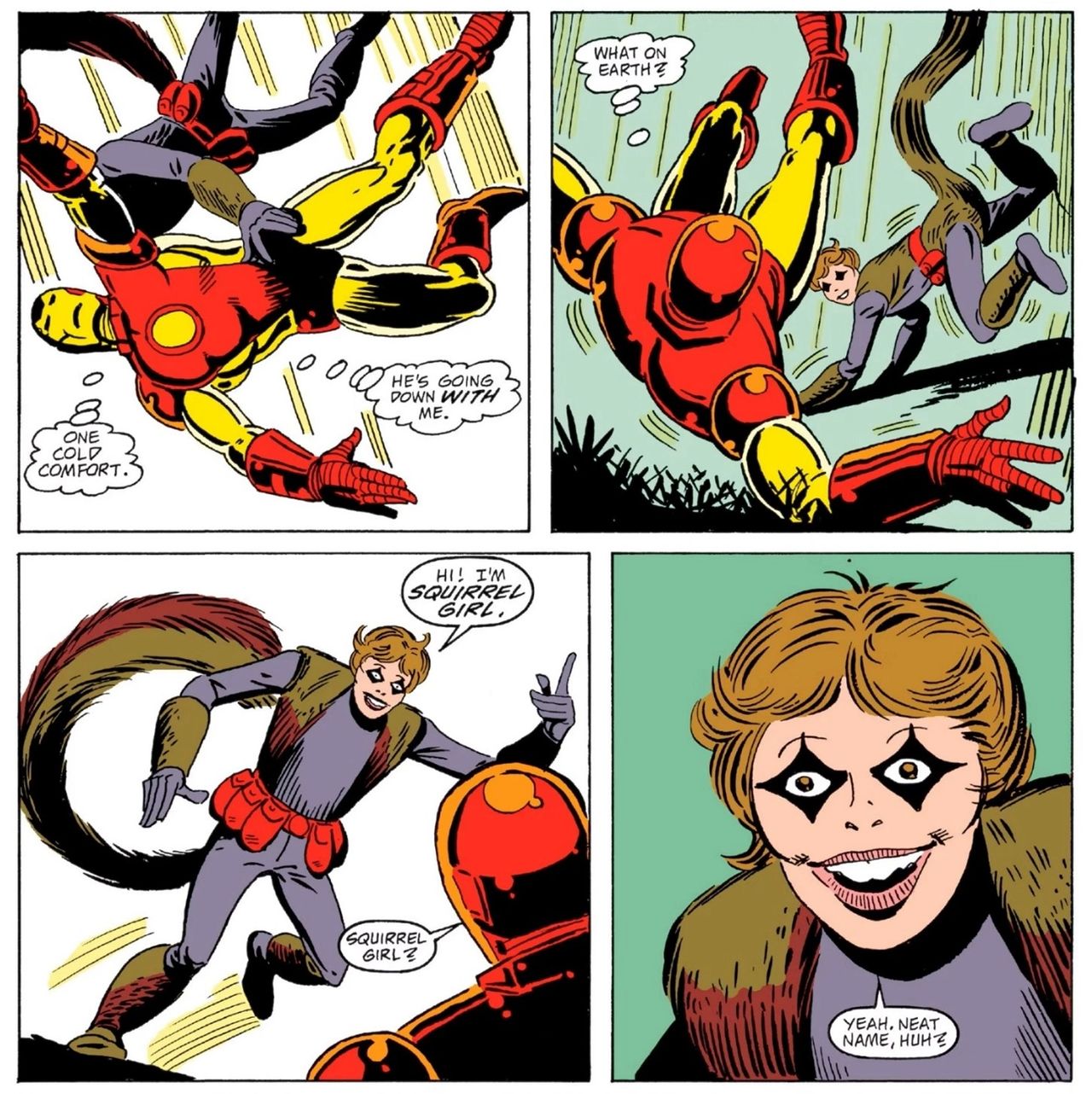
[Marvel Super-Heroes #8 Squirrel Girl]
During the late Sixties, with steady work coming in from DC and Charlton, Ditko had leverage to take risks, becoming one of the first popular creators to dive into creator-owned work. He joined a team of creators organized by friend Wally Wood to publish witzend, an underground magazine that included comics by The Spirit’s Will Eisner and Pulitzer Prize winner Art Spiegelman. According to Ditko Shrugged: The Uncompromising Life of the Artist Behind Spider-Man, the magazine struggled financially, but offered incredible creator freedom.
During a time when a Comics Code enforced over-the-top rules such as not allowing the term “weird” in titles or the portrayal of werewolves, witzend had no editorial intervention.
According to the introduction to a 2014 collected edition of witzend, written by Bill Pearson, Wood and Ditko were polar opposites politically, engaging in “fierce” debates, but they were close friends who were passionate about creator rights.
“Wally Wood did an outstanding thing for writers and artists,” Ditko wrote in a 2014 letter to Currie, “an opportunity to create and copyright what one creates, protecting and able to cash in on it at any future time.”
In the third issue, Ditko introduced his most controversial character — one he would come back to persistently for the remainder of his life — and, unlike with Spider-Man, he retained full rights.
Steve Ditko speaks regarding Mr. A: “He’s one character from the past that I’d like to see in the present and the future.”
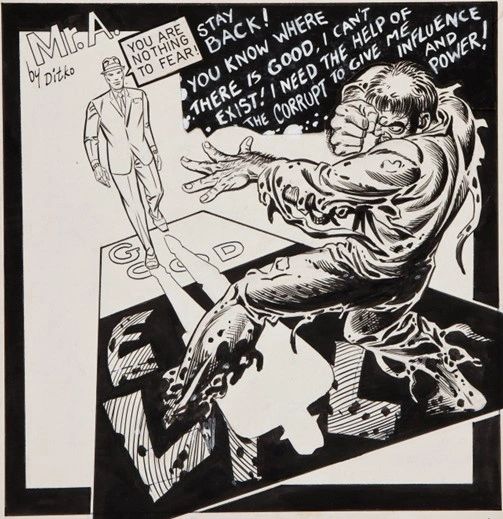
[Mr A.] © Ditko Estate, 2018, All Rights Reserved
By then, comic heroes had begun blurring their morality, inching their way to becoming corrupt Watchmen and Ditko felt readers were losing the ability to decipher right from wrong.
Steve Ditko speaks: “With superheroes being made into anti-heroes, is there any possible, valid standard of a right, good, best model for anyone, anything?”
His creation, Mr. A, told a morality play steeped in exaggerated violence. Like Ditko, Mr. A compartmentalized his life: Vanishing behind an emotionless metal mask. Unfortunately, he never revealed his planned origin story. In the end of his first appearance, Mr. A, moralizing the actions of a criminal, punches a murderer and leaves him dangling off a rooftop until the guy falls to his death.
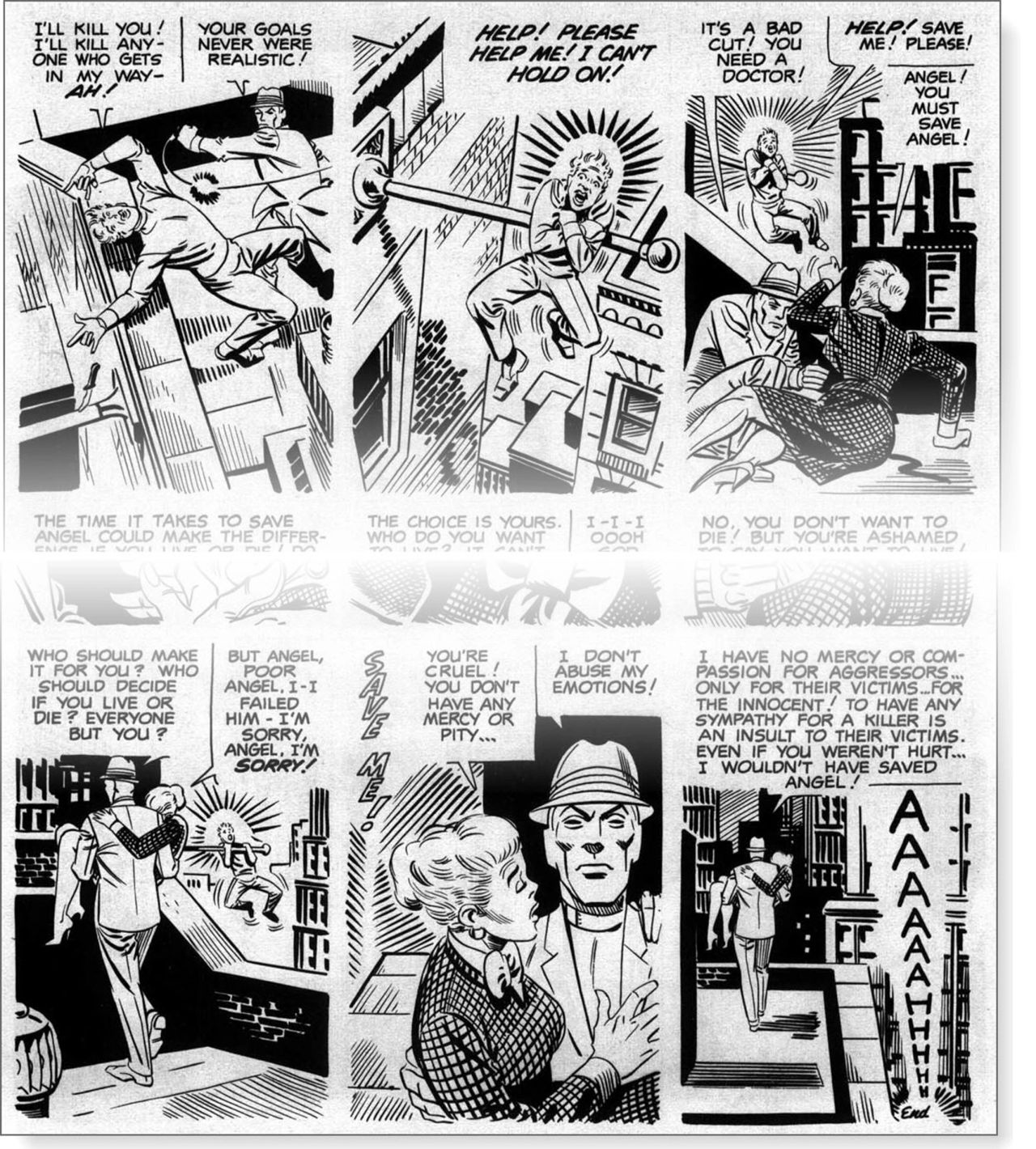
[Mr A.] © Ditko Estate, 2018, All Rights Reserved
“I don’t abuse my emotions,” Mr. A says, echoing the merciless tone of early Batman stories. “I have no passion for aggressors, only for their victims, for the innocent.”
AWARD-WINNING INDEPENDENT-comic creator Dean Haspiel remembers very little about the time he first knocked on Ditko’s door in 2005. “Oh, my God,” he thought to himself, taking a deep breath. “Legend was, he would just slam the door on you if he didn’t recognize you. Not in a cruel way, but just like, ‘I don’t have time for this,’” he says.
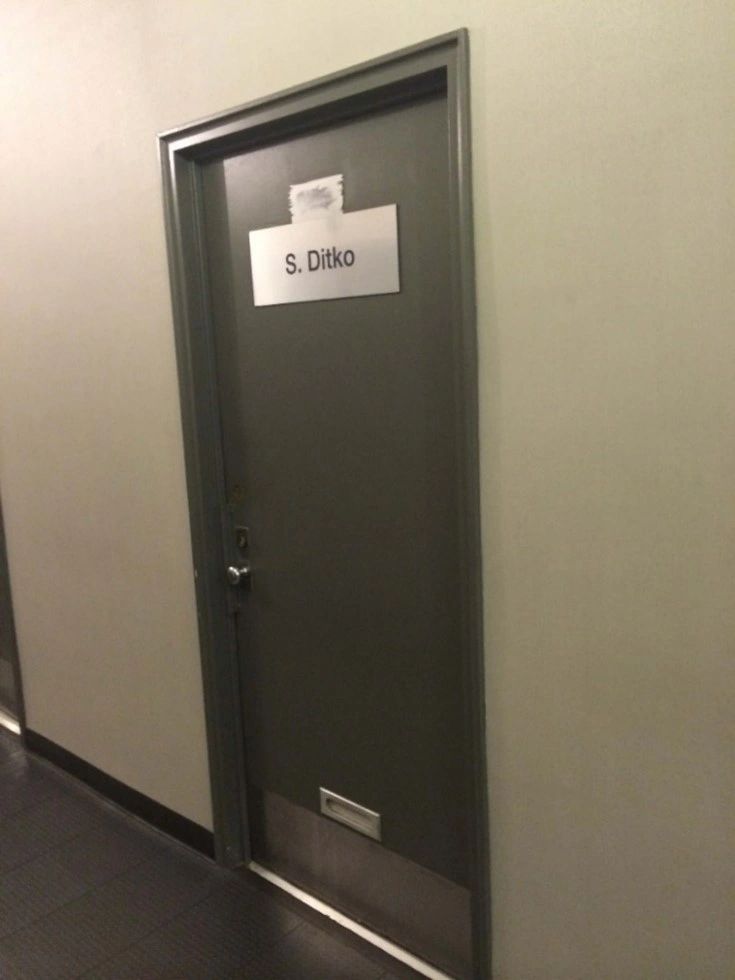
[Steve Ditko’s famous NYC Studio Door]
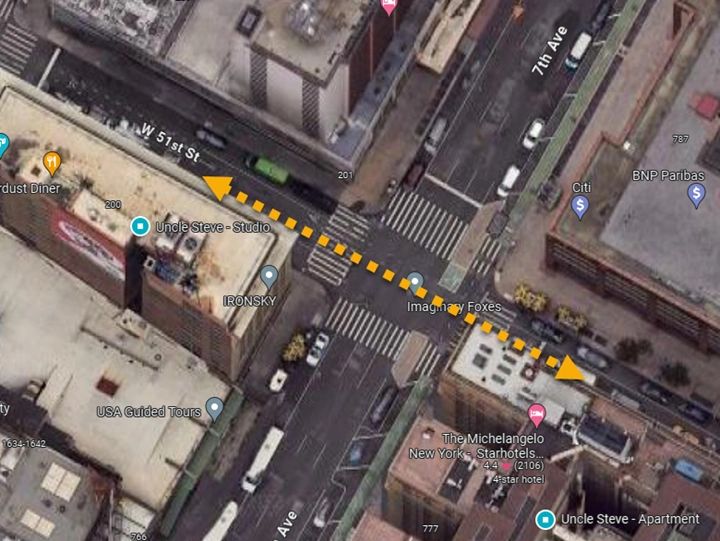
Anyone could visit Ditko’s office at 200 W. 51st St., only blocks from Times Square, where costumed Spider-Men clicked photos with tourists. Ditko’s name was on the door, and his phone number was in the phone book. Located on the seventh floor of 12-story building, his office was lined on one wall with bookshelves brimming with books of all kinds. But to even know that much, you’d have to be one of his handful of trusted friends or industry associates.
Haspiel felt it was acceptable to visit since it was a business office. Ditko cracked open the door, wearing a button-down and looking somewhat bothered, as if he had to pull himself away from his work. (Which he very likely did.)
It was the first of five visits over the next few years. Each time, Ditko would crack the door, and step out into the hallway where they’d chat. Visits would last five to 20 minutes. One time, Haspiel even brought his mom. “I can’t really remember the conversations because you’re in a fugue state. You black out when you are around someone who is that accessible yet inaccessible at the same time,” Haspiel says. “I would show him some artwork. He never showed me anything. I always felt like I interrupted him because I’m sure he was 24/7 in his own brain and space.”
Being a friend to Ditko wasn’t simple, says Squirrel Girl co-creator Murray, whose decade-long relationship ended in the late 1990s, when Murray shifted careers to become a psychic and medium and felt Ditko wouldn’t approve.
“Socially, he could be difficult,” Murray says. “He had so many rigid walls around him about certain things that people didn’t understand. There was always this risk of people saying or doing the wrong thing and being completely thunderstruck that this friendly guy suddenly just blew up in their face over something innocuous.”
During one phone call, Ditko told Murray that people should never contradict themselves. “I said people basically are self-contradictory,” Murray recalls, so Ditko hung up on him, and they didn’t speak for years.
The relationship never felt stable, Murray says: “In the back of my mind, I often wondered, ‘Did Steve think that maybe someday I would take everything that he told me and write an article about it and thus betray him?’”
But there were friends who Ditko allowed greater access to his many worlds. They may not have known about his time in the Army or his family, but he had friends who he’d meet weekly for burgers to discuss movies and New York history, friends he allowed into his home to set up his VCR. “He already had a copy of the movie Fountainhead ready to watch,” Mort Todd said. He even let Mort Todd discuss Spider-Man over the decades.
“I didn’t just come straight out and go, ‘Why do you hate Stan so much?’” says Mort. “We’d just be talking about something, and it would segue into other things.”
Ditko’s preferred communication was handwritten letters, and he cultivated a web of pen pals. He replied to everyone who wrote to him, even going so far as to write explanations of why he refused to sign autographs, before signing the letter.
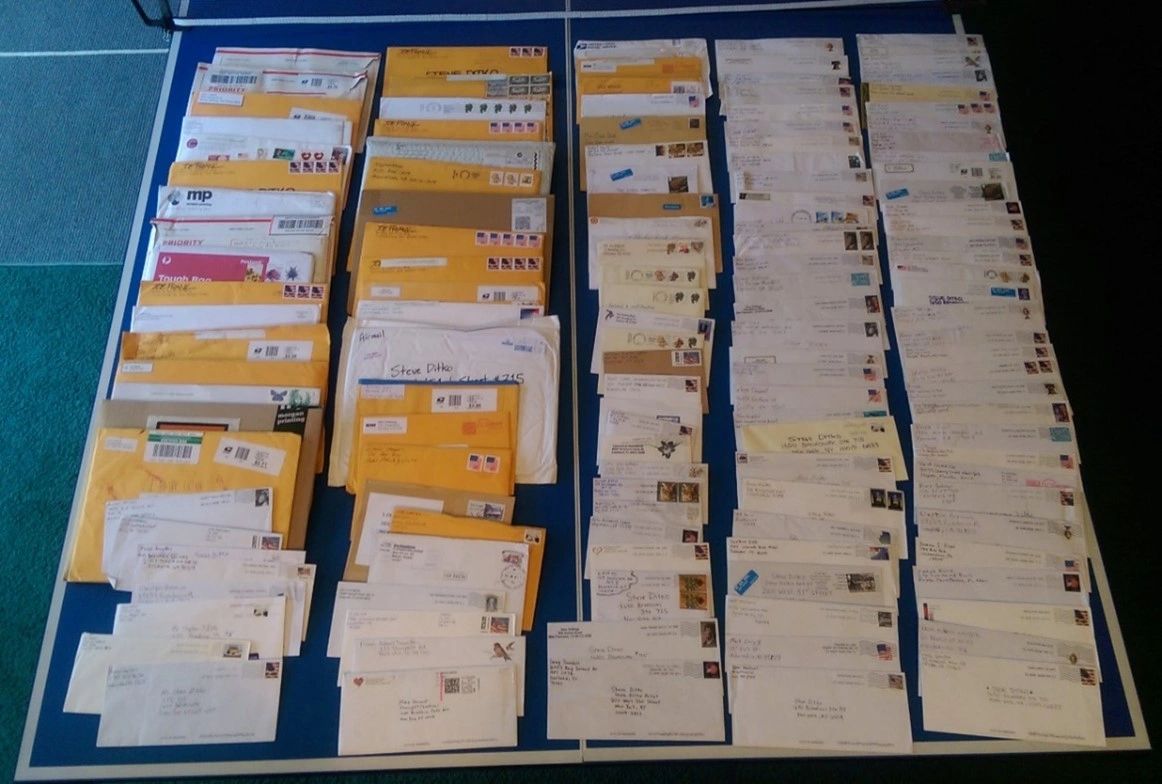
[Letters to Steve Ditko found from his Mail Slot after a few months prior to his passing]
Steve Ditko speaks: “I’ve had occasions of work being interrupted by a phone call – interrupted by someone at the door. It’s expected, accepted by everyone who has an office. With a letter dropped in the mail slot I can pick it up, read it at my leisure and answer the interesting parts. That should certainly best benefit both parties.”
“He once told me that the difference between myself and some others is I was concerned and willing to talk about his latest creations or characters rather than just dwell solely on Spider-Man,” says Joe Frank, who blindly contacted Ditko in 1981.
Ditko and Joe Frank wrote each other nearly 1,500 letters, ranging from four to 10 pages, discussing Ditko’s appreciation of Don Rickles and his respect for Dan Rather and William Shatner, two examples, Ditko felt, of people who didn’t allow one role to define them. Joe Frank mentioned to Ditko that he loved the first season of Lost in Space. Although Ditko wasn’t a fan, he sent him newspaper clips when one of the actors died. “Not only did he remember, but he thought enough of me to do that,” Joe Frank says.
When Ditko stopped responding in 2018, Frank wrote weekly for five weeks, then penned one final letter saying, “Thank you very much for all that you’ve given me.” Little did he know that his legendary pen-pal had passed on.
Ditko continued visiting home every Christmas and Fourth of July, but by the turn of the century, the visits had slowed to a trickle. He was aging, travel was hard. Most family members also remember his later years based on the letters he sent.
When he did trek home, he requested the events were only for family — friends not allowed. By the time they were adults, his nieces and nephews had figured out just what their uncle did. They also learned about the mystique (both true and false) surrounding him.
Ditko’s nephew, Patrick, was in grade school in the late Seventies when his peers called him delusional because he told them his uncle created Spidey, so he stopped telling people.
As an adult, Mark Ditko became a fan of comics himself, and in the 1990s, he frequented conventions meeting creators his uncle had worked with including Jack Kirby, Stan Lee, Jim Shooter and more. With most everyone expressing their admiration, or relaying messages to him. Mark would sometimes write his uncle 20- to 40-page letters, discussing everything under the sun.
At these cons, Mark began hearing the myths of the “recluse”, or the “bitter” man. “I did not do anything about these statements at that time because I knew he wouldn’t want me to,” he says. So, Mark said whatever he felt comfortable saying, and then just had to grin and bear it.
Two years after the Dr. Strange movie hit theaters, and the year that his uncle passed away, 2018, Mark visited the New York Comic Con. He was surrounded by fans who might not know the role his uncle played in creating the characters who were plastered on their shirts, socks, and backpacks. Mark stopped at a dealers’ booth to flip through original artwork.
Until the mid-1970s, Marvel held onto creators’ original artwork. “Few cared about it,” Shooter wrote in a 2011 blog post. “As the collector market grew stronger, and the artwork became valuable, artists started caring.”
Ditko himself never put much value on his original artwork. To him, he was paid for his work, and he was on to his next project. But Ditko did not like the idea of others having his artwork, either. In a 1993 essay, he referred to the art market as a “thieves market,” because, Ditko said, most of his Spider-Man artwork had been stolen from Marvel offices by employees.
During the early 1980s, according to Marvel Comics: The Untold Story. Marvel returned original art to many artists in exchange for them signing agreements acknowledging they created it work-for-hire. “The release form is almost a full page of binding conditions.… All rights are with Marvel,” Ditko wrote in his 1993 essay, acknowledging that he received much of the Dr. Strange work back, as well as two full issues of Spider-Man and a third almost-complete issue.
In 2017, a single page from Spider-Man #25 sold for $105,000. In 2008, the pages from Spider-Man’s first appearance were anonymously donated to the Library of Congress. Ditko told a reporter from the Chicago Tribune, “I couldn’t care less.”
At the convention, Mark heaved open a binder of original art pages and was thrown back: full stories created by his uncle in the late 50’s and early 60s, selling for $20,000 to $30,000 per page.
“I had to leave and get some air,” Mark said. “It was all stolen.”
FOR THE FIRST TIME SINCE 1965, Ditko and Lee spoke in person again, in a meeting held at Marvel’s 387 Park Avenue South office in the summer of 1992.
Ditko had been freelancing with Marvel for years, and Lee was cooking up an idea for a garbageman superhero from the future. Marvel’s then editor-in-chief, Tom DeFalco, thought, maybe they could work together?
“Other than a slight pause after I [told] Steve, over the telephone, that Stan wanted to meet with him to discuss a new character, there was no hesitance for them to meet,” says editor Jim Salicrup. “I like to joke that I imagined Steve thinking during that very brief pause, ‘Ah, Stan’s finally come crawling back!’”
The 1990s was an interesting time for Ditko. “A lot of the editors would make fun of Ditko,” seeing him as dated, says the former Marvel editor, Mort Todd. There was a crew of “hot superstar artists” whose “signatures would get bigger and bigger on their art,” Mort Todd says. On their backs, Marvel sales skyrocketed, with artist-tagged relaunches of Spider-Man and X-Men titles selling millions. Then in 1992, they all walked — they’d seen what the industry did to the early creators and swore it wouldn’t happen to them
But they were also inspired by Ditko’s creative-owned work, says Todd McFarlane, one of the artists who made the jump, going on to help found Image — the third-biggest comic company in the world, publishing only creator-owned work, including The Walking Dead, Saga, and McFarlane’s Spawn. “I basically say I’m a bizarre clone of him. Do Spider-Man. Make your reputation … then go and do some of your own crazy stuff.”
The 1992 meeting between Ditko and Lee lasted a half hour, according to DeFalco. “Stan jumped up and embraced Steve as soon as he entered the room,” he said in an interview with David Currie, author of Ditko Shrugged. “They seemed very happy to see each other.”
Eventually, Ditko passed on working with Lee on the garbageman-superhero, feeling that the future portrayed in it was not to his tastes; he wanted something more positive.
“After Steve explained why he didn’t want to work on such a character, Stan went for broke and tried to talk Steve into doing a Spider-Man graphic novel with him, telling him it would sure to be a big hit,” Salicrup recalls. “Think of all the money we’ll make,” Salicrup remembers Lee saying, in a 2018 blog post, but Ditko declined, saying he could never care for the character like he once had.
Salicrup left Marvel soon after, but believes if he had stayed, Ditko and Lee would have worked together again, on something with a more positive future. “I could’ve easily talked Stan into working on such a character with Steve,” Salicrup says.
As close as the reunion was, proper, rightful credit for Steve Ditko on his work at Marvel continued to rear its ugly head.
Steve Ditko speaks: “It was three closely related public incidents and their implications that caused me to break my silence regarding the games of others and the "creator" issue.
1) Time crediting Stan as the "creator" of Spider-Man (Nov. 6, 1998),
2) The CBM interview with Stan (#61, July 1998) and
3) Stan's own "Soapbox" in Marvel comics (May 1999).
The three combined items demanded a balancing of the scales of identification, just credit and just treatment.
So it is past time to raise the other half of the cognitive curtain and see which performer is laying out the clearest, honest scenario.
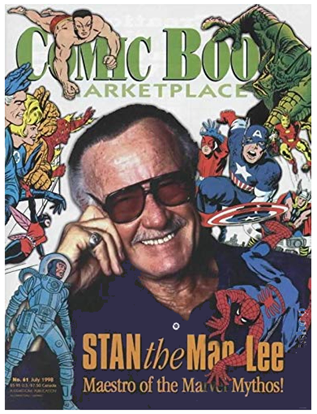
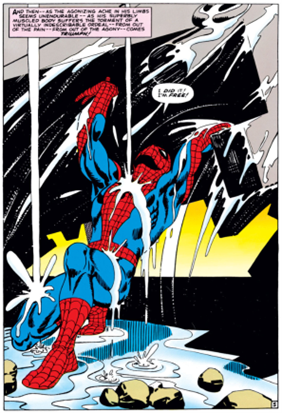
In a 1998 issue of Time, Lee was credited as Spider-Man’s creator. In a 1998 issue of Comic Book Marketplace, Lee incorrectly claimed he came up with the idea for one of Ditko’s most iconic Spider-Man panel sequence – the lifting scenes. Ditko wrote letters to the magazines complaining. Lee later responded directly to Ditko with a letter claiming he “always considered Steve Ditko to be Spider-Man’s co-creator,” but Ditko was not satisfied with the word “considered.”
“At that point I gave up,” Lee said in the 2007 BBC documentary In Search of Steve Ditko, But Jonathan Ross was persistent in that interview with Lee when he asked: “But do you, yourself, believe that he co-created him?” After a very long and very awkward pause, in his typical reluctantly smiling way, Stan says: “I’m willing to say so.” Ross follows with “That’s not what I’m asking.” Stan proceeds, “No. And that’s the best answer I can give you.” Ross then says, “It’s a ‘no’ then, really.” Then in a more animated and intense way, Stan retorts, “No, I really believe that the guy who dreams the thing up created it. You dream it up and then you give it to anybody to draw it.” And then followed with “You made me say that in this documentary, and I’m sorry I said I said it...”
Although Ditko appeared less and less in mainstream comics in the late 1990s, every day he still casually strolled the 250 feet from his apartment to his office on the same street to work.
It didn’t matter to him that his creator-owned work that he focused on during his last two decades didn’t have Spider-Man sales, and in reality, it was never about the sales in his later years anyway. And according to his family, he was doing fine financially, receiving royalties from his earlier comics and other material reprints. Mort Todd also believes he was receiving Social Security. He even began writing essays to dispel the rumors about himself. He had to realize that by not “saying the truth,” his nephew Mark says, he inadvertently preserved the myths.
It’s speculated that in 2017, Ditko made a clandestine appearance at New York Comic Con after someone talked him into checking it out. If he actually attended, it’s likely that no one would have even recognized him amongst the sea of cosplay spider-people and other comic book characters.
Six and a half years later, there’s a play based on Ditko, and the family’s working on a biography as well as many other projects.
There’s a DitkoCon and huge murals throughout his hometown.
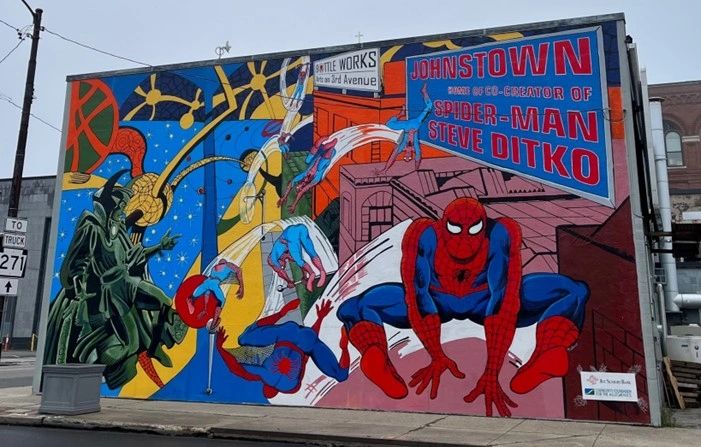

One is on the cover to this years’ Johnstown visitor guide. “He would hate it,” says Matt Lamb, a Ditko fan who never met the artist, but who organized the murals and the convention in his honor. “We won’t let people like Van Gogh or Picasso fade away because they had such an impact on the art world. We’re not gonna let Steve fade, either.”
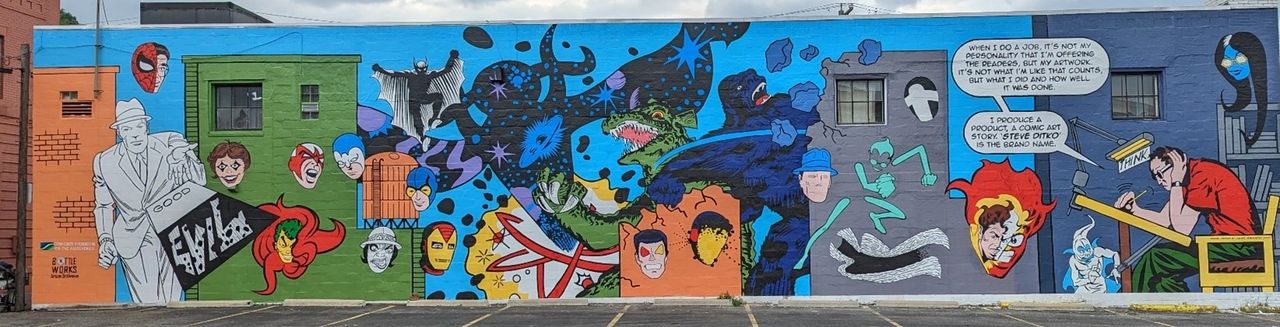
Ditko wasn’t wired or trained for the celebrification of comic creators, says McFarlane, who mentors young creators on marketing themselves. “There are hundreds and hundreds of artists that I think draw circles around me, and yet I am going to have a better career than them. Why? Because I hustle.”
People would view Ditko much differently in 2024, says Ultimate Spider-Man’s Bendis. Fans, he says, are much more respectful of an artist’s wishes and understanding of artist Rights. Many of the career moves that people snubbed Ditko for, such as going independent, are now the norm. “You brought us Spider-Man,” he says. “We love you.”
The Marvel and DC universes remain awash with his characters. The Creeper. Hawk and Dove. Speedball. Squirrel Girl. Spidey’s entire rogues’ gallery. From 1975 to 2005, nearly every comic produced by Marvel had the words “Stan Lee Presents” on the credits page, although Lee stopped writing regularly in 1972, but today, issues often begin with Ditko listed as co-creator of his characters. And even further, this August, at the annual D23 convention, Ditko will be inducted as a member of the 2024 Disney Legends Class.
Everyone who writes Spider-Man or Dr. Strangeis “talking to Steve Ditko,” says Tom King, a DC Comics writer who implements Ditko’s nine-panel grid and wrote a “Steve Ditko-esque” character that appeared in the series Rorschach, about the Watchmen character modeled on Mr. A. “You’re adding to a world other people created, so you’re not creating your own stories. You’re having conversations with generations that came before you.”
By the late aughts, an ageing Ditko stopped getting on the train home to Johnstown, instead continuing to communicate with family through letters. His nieces and nephews love the Marvel movies. His niece especially adores Tom Holland in the role of Spider-Man. It’s impossible to not be a fan, Mark says. It was a “perfect storm back there at Marvel in the early 1960s, and it was Stan Lee, Jack Kirby, and Steve Ditko,” Mark says. “It’s probable that if one of them wasn’t there, we wouldn’t have as much of the Marvel universe as we have now.”
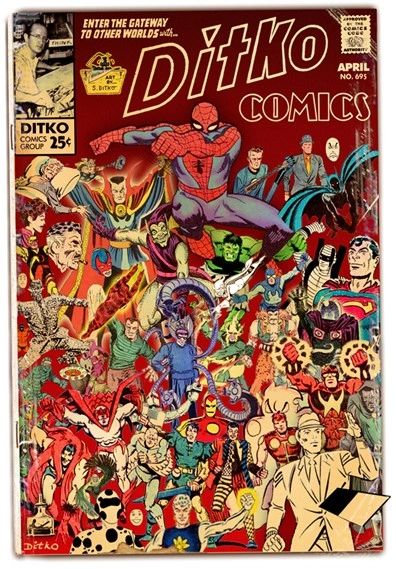
The last time his brother Patrick spoke with Ditko via phone, Steve was in the hospital.
“Why aren’t you working today?” Patrick said, and Steve Ditko paused, then asked how Patrick’s wife, Joan, was doing. Soon after the call abruptly ended, Ditko discharged himself, retreating to his comfort zone, in his apartment and office, his treehouse, Peter Parker’s laboratory, where he first invented his magnificent webs.
“He never should have gone home,” his nephew Patrick says. “We were calling, and we ended up doing a wellness check. The police broke in.”
His body was discovered in his apartment on July 29, 2018. It’s estimated that he had a heart attack. He was 90.
As soon as arrangements could be made, Patrick, Steve’s brother, along with son’s Patrick and Mark, made the trek to Manhattan to clean out his apartment and studio. But that is a tale for another time.
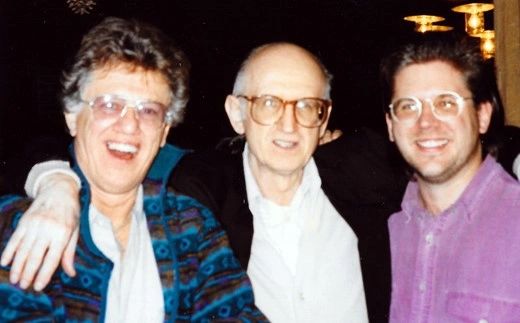
[From left to right, Patrick S. Ditko, Steve Ditko, and Mark S. Ditko © 2018 DitkoVerse /Ditko Estate, all rights reserved.
One of the first things his brother said to his kids after learning of Ditko’s passing was that the family needed to write a book and title it “Steve Ditko, the Man.” (Note, that sadly, on June 13, 2024, Patrick S. Ditko, Steve Ditko’s brother, passed away at 89. This was among his final interviews.)
Steve Ditko’s body was cremated. His nephew says, “His ashes were spread, and that’s all we’ll say.” The family held a small mass, but they won’t reveal where. Only his brother attended.
“I didn’t want it to be made public because I was afraid of what might happen,” he says, concerned fans and locals would show up. “I called my relatives, and I told them, ‘There’s going to be this [mass], but I don’t want you to attend.’ They got upset about it, so I said, ‘You know what, that’s the way it is.”
Steve Ditko.
He woke up every morning just like me and you. He walked to his studio in the heart of NYC every day regardless of the weather, sat down at his drawing board, picked up his ink pen, put his head down, and created Heroes… for over 60 years.
He lived by his own rules, and most everyone that knew him saw this to some degree. He did what he felt was right, and other’s opinions had little influence on him.
Steve Ditko led an uncompromising life. He held on to his beliefs, his family, and his craft to the very end. And never asked for more than simply what he earned. What more can one ask of him?
Steve Ditko speaks: “A man is what he stands for – why is it right to stand for it and to protect and defend for all the time? In a struggle, a man can lose only if he gives in, defeated by self-destruction, by accepting the wrong as right to act against himself.”
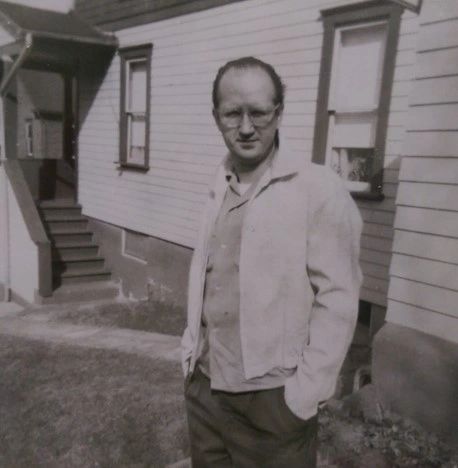
[Steve Ditko in the yard of the house where he grew up] © Ditko Estate 2018, All Rights Reserved